BACKGROUND
Postpartum hemorrhage (PPH) remains one of the most critical and life-threatening complications of childbirth globally and continues to be a leading cause of maternal mortality, particularly in low- and middle-income countries. According to the World Health Organization, PPH accounts for approxmately 27% of all maternal deaths worldwide, with the vast majority occurring in sub-Saharan Africa and South Asia (WHO, 2022). Nigeria, being one of the highest contributors to global maternal mortality, faces a disproportionate burden of PPH-related deaths, especially in rural and underserved communities where access to quality maternal healthcare remains limited (National Population Commission [NPC] & ICF, 2019).
Despite ongoing investments in strengthening facility-based maternal health services, significant systemic and behavioral barriers persist at the community level. These include delayed recognition of danger signs, poor health-seeking behaviors, financial constraints, socio-cultural beliefs, weak referral systems, and a persistent reliance on traditional birth attendants (TBAs) for childbirth services. These factors collectively contribute to the well-documented “Four Delays” model delay in decision to seek care, delay in reaching care, delay in receiving adequate care and a lack of accountability/responsibility for maternal outcomes which continues to drive maternal mortality outcomes in Nigeria (Thaddeus & Maine, 1994).
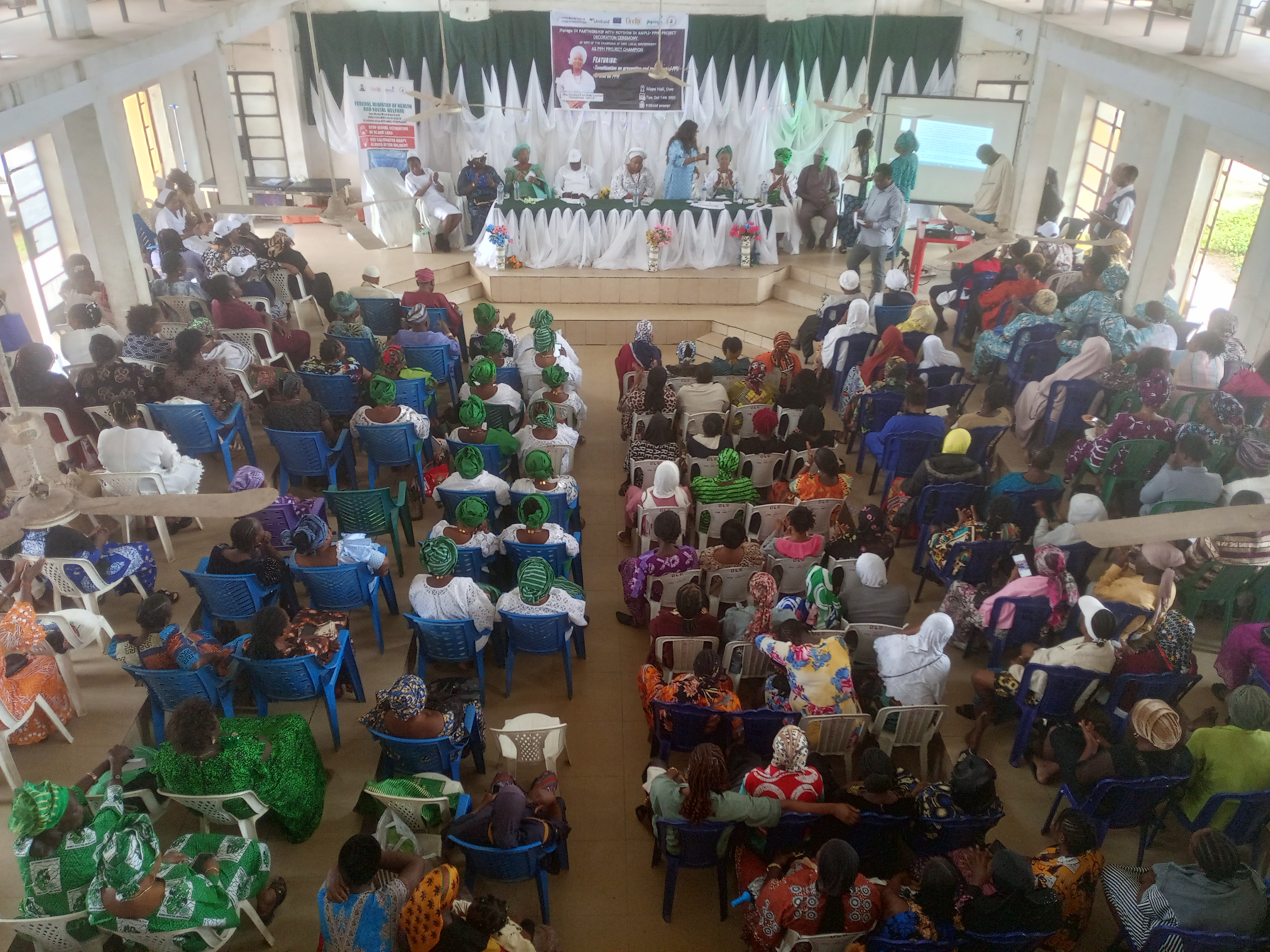
In Ondo State, while there have been commendable government-led initiatives aimed at improving maternal health outcomes, gaps still exist in ensuring that pregnant women are identified early, linked to care, supported throughout their pregnancy journey, and delivered safely in health facilities with skilled birth attendants. Recognizing that health facility improvements alone are insufficient without strong community systems, the AMPLI-PPHI project, implemented in partnership with ROTDOW, adopted a community-led approach to addressing PPH.
This approach was grounded in the understanding that communities are not just beneficiaries of health interventions but are critical drivers of change. By empowering community structures, strengthening linkages between households and health facilities, and addressing socio-cultural and economic barriers, the project sought to create a sustainable ecosystem for preventing PPH and improving maternal health outcomes.
EXECUTIVE SUMMARY
The AMPLI-PPHI project in Ondo State demonstrates that community-led approaches can significantly contribute to the prevention of postpartum hemorrhage by addressing the root causes of delays in maternal care.
Through its partnership with ROTDOW, the project implemented a comprehensive package of interventions that bridged the gap between communities and health facilities. These interventions were designed not only to increase awareness but to drive sustained behavioural change, improve service utilization, and strengthen accountability within the health system and most especially uptake of WHO recommended and adopted by Nigeria i.e Calibrated drapes for measuring blood flow, Heat Stable Carbetocin (HSC) and Tranexamic acid (TXA) for pre ention, and management of PPH
A central pillar of the project was the identification, tracking, and continuous engagement of pregnant women at the community level. CHIPS agents, Male engagement, employ landlord meetings, volunteers and structures played an active role in mapping pregnant women, conducting home visits, skill acquisition, Radio jingle and ensuring that each woman was supported throughout her pregnancy journey. This included accompanying pregnant women to health facilities for antenatal care (booking) a critical intervention that significantly reduced delays in accessing care and improved early registration rates.
The project also prioritized Respectful Maternity Care (RMC) training for healthcare providers. This intervention addressed one of the most critical yet often overlooked barriers to facility utilization poor client-provider relationships. By improving the quality of interactions between health workers and pregnant women, the project helped rebuild trust in the health system, leading to increased facility-based deliveries.
Another key strategy was the collaborate with traditional birth attendants (TBAs) as partners rather than competitors to mobilize the pregnant women for facility delier. TBAs were educated and integrated into the referral system, enabling them to identify danger signs early and refer pregnant women to health facilities promptly. This approach leveraged existing community trust structures while promoting safer delivery practices.
The project further demonstrated the power of community ownership and local resource mobilization. A notable example includes the community-led contribution of ₦250,000, which facilitated the procurement of calibrated drapes for measuring blood loss during delivery. This intervention significantly led to the expansion of the project to 4 additional facilities. The success of this project in one of the implementing site created a ripple effect, leading to expansion into PHC Shagari, where a Community Governance Committee (CGC) member contributed an additional ₦50,000 to support similar interventions.
Infrastructure improvements were also observed, including community-supported incinerator initiatives, which addressed infection prevention and control challenges within health facilities. These contributions reflect a growing sense of ownership and commitment to sustaining health outcomes beyond the life of the project.
Overall, the project highlights that when communities are empowered, informed, and engaged as active stakeholders, they can drive transformative change in maternal health outcomes. The lessons from this intervention provide a strong case for scaling community-led approaches as a sustainable strategy for preventing PPH and reducing maternal mortality in Nigeria.
KEY FINDINGS AND EVIDENCE
i.Community-Based Tracking and Accompaniment Reduced Delays in Care: One of the most impactful interventions was the systematic identification and tracking of pregnant women within communities.
ii. Community volunteers maintained updated records of pregnant women and conducted regular home visits to monitor their progress.
A critical component of this strategy was accompanying pregnant women to health facilities for antenatal booking. This directly addressed the first and second delays by:
Ensuring early registration
Providing emotional and logistical support
Reducing fear and uncertainty associated with facility visits
Evidence from project communities showed increased antenatal attendance and improved continuity of care among pregnant women who were actively tracked and supported.
ii. Respectful Maternity Care (RMC) Improved Service Uptake: The introduction of RMC training significantly transformed the quality of care provided at health facilities. Women reported feeling more respected, heard, and supported during their interactions with healthcare providers.
This intervention directly addressed a major barrier to facility utilization negative past experiences. As documented by Bohren et al. (2015), disrespect and abuse during childbirth are key deterrents to seeking facility-based care. By improving provider attitudes and communication, the project contributed to increased trust and higher rates of facility-based deliveries.
iii. Community Financing Strengthened Health System Responsiveness: The project demonstrated that communities are willing and able to invest in health solutions when properly engaged.
The ₦250,000 community donation for the procurement of calibrated drapes is a strong example of local ownership. This donation led to the expansion of the project to 4 additional facilities.
iv. Infrastructure Improvements Enhanced Quality of Care: Community-led support also extended to infrastructure, including the development and support of incinerator systems for safe waste disposal.
This addressed critical gaps in infection prevention and control, improving overall facility readiness and quality of care. These improvements contribute indirectly to better maternal outcomes by creating safer delivery environments.
v Engagement of TBAs and CHIPS Agents Strengthened Referral System Rather than excluding TBAs, the project engaged them as partners. This approach:
Leveraged their influence within communities
Improved early detection of complications
Strengthened referral linkages
This aligns with global best practices emphasizing inclusive community health strategies.
vi. Home Visits Reinforced Continuity of Care: Regular home visits by CHIPS agents ensured that pregnant women received consistent follow-up, reminders, and support. These visits helped reinforce health education messages and ensured that no woman was left behind.
viii. Multi-Stakeholder Collaboration Expands Reach: Partnerships with CSOs and NOA enhanced:
Community awareness
Information dissemination
Program reach
ix. Storytelling as a Tool for Social Behaviorial Change: The use of PPH survivor stories added a powerful dimension to community engagement. Stories made risks tangible and relatable, encouraging behavior change in ways that traditional messaging alone could not achieve.
x. Effective Use of Data for Adaptive Implementation: The implementation of pulse surveys provided a strong foundation for data driven decision
xi. Male Engagement: The men realize the importance of attending the ANC with their wives. Men now follow their wives to ANC. A husband was recognized and appreciated during SURVIVORS program.
SUSTAINABLITY MEASURES
i. Strengthening community systems and ownerships: One of the most impactful achievements of the project integration of the Community Governance Committee. CGC played a vital role in sustaining project goals. Their contribution included Emergency transport system for pregnant women during labour. Leading awareness campaigns within their communities. Integrating maternal discussions into local landlords’ meetings.
ii. Integrating livelihood support Enhances Health Outcomes: Economic empowerment initiatives, such as Soap making and saving schemes, significantly improved women's ability to access healthcare. Addressing financial barriers alongside health interventions is essential for improving maternal health outcomes.
iii. Partnership established and collaboration with National Orientation Agency (NOA) and 20 CBO ensures continued awareness creation and education.
iv. Community Transport System: CGC members who own motorcycles and vehicles voluntarily committed to supporting women in their communities when labour begins.
CONCLUSION
The AMPLI-PPHI project provides compelling evidence that community-led approaches are not only effective but essential in addressing postpartum hemorrhage and improving maternal health outcomes.
By shifting from a purely facility-centered model to one that actively engages communities, the project successfully addressed critical barriers related to access, trust, and quality of care. The integration of community tracking systems, accompaniment strategies, respectful maternity care, and local resource mobilization created a holistic and sustainable approach to preventing PPH.
Importantly, the project demonstrated that communities are not passive recipients of healthcare but active agents of change. Their willingness to contribute financially, support infrastructure, and participate in health governance structures underscores the potential for long-term sustainability.
At Ondo state and Nigeria at large continues its efforts to reduce maternal mortality, there is a clear need to scale up community-led models that complement existing health system interventions. The lessons from this partnership with AMPLI-PPHI, ROTDOW offer a practical, evidence-based pathway for achieving this goal.


