INTRODUCTION
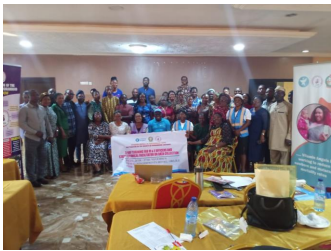
The 2025 Capacity-Building Training for State Technical Facilitators (STFs) and Monitoring
& Evaluation Officers across the 18 Local Government Areas of Ondo State was conducted by
Restoration of the Dignity of Womanhood (ROTDOW) in partnership with Vitamin Angels.
The training was designed to strengthen the competencies of frontline implementers
responsible for data reporting, maternal and child health interventions, and the upcoming
December 2025 Maternal, Newborn & Child Health Week (MNCHW) campaign.
The program brought together 46 participants among which are STFs, M&E/HMIS officers,
Vitamin Angels representatives, and officials from the Ondo State Primary Health Care
Development Agency (OSPHCDA) nutrition department, marking a significant step in
enhancing service delivery for women and children in the state.
OPENING SESSION
Registration commenced early, and the event formally opened with a prayer led by Mrs
Adeyeri Eunice, an HMIS Officer participant. The program anchor, Mr. Oluwatobiloba
Eruobodo, guided the meeting, facilitating an interactive introduction where participants
adopted “workshop names,” creating a lively and collaborative environment.
WELCOME ADDRESS
Mrs. Omolona CEO ROTDOW, welcomed all participants, reiterating ROTDOW’s vision of ensuring a society where the dignity, rights, and wellbeing of women and children are valued and protected. She emphasized that the partnership with Vitamin Angels ensures that no mother or child is left behind in accessing essential health and nutrition services. She commended participants for their commitment to service delivery at the grassroots and urged them to embrace the training with maximum participation, an open mind, and readiness to adopt improved strategies.
GOODWILL MESSAGE
Mrs. Ronke Obaloyo Assistant Director, Nutrition – OSPHCDA, appreciated Vitamin Angels and ROTDOW for their consistent support to Ondo State, particularly in strengthening nutrition and MNCH interventions. She highlighted recent successes in MMS rollout training and expressed confidence that this capacity-building effort will significantly enhance implementation and reporting quality across all LGAs.
TECHNICAL SESSIONS
a. MNCHW Training Objectives
• Ensure all children aged 6–59 months receive Vitamin A supplementation
• Ensure children 12–59 months receive deworming tablets
b. List of Interventions & Target Populations for December 2025 MNCHW
c. Vitamin A supplementation, Deworming, MMS for pregnant women
d. MUAC Demonstration & MNCHW Data Tools: Participants received practical training on using MUAC tapes to screen for acute malnutrition. Mrs. Ronke emphasized the influence of nutrition on a child’s intelligence and overall development. She also explained all MNCHW data tools, their purpose, and how they are to be accurately completed.
e. DHIS2 Training – Step-by-Step Practical Session: This hands-on digital training provided:
• A clear step-by-step guide for entering data into the Nutrition Campaign Dataset on
DHIS2
• Demonstrations on data storage and flow
• Practical group exercises based on LGA teams
• Procedures for data correction, validation, and exporting data into printable Excel
formats
• Strong emphasis was placed on data accuracy, as DHIS2 outputs are reviewed by
national and international health partners for research, planning, and quality validation.
f. Vitamin Angels Data Collection Session: Mr. Olayinka Olafunwa shared:
• a brief history of Vitamin Angels
• The importance of data collection in reporting to sponsors
• The transition to DHIS2 to improve reporting speed and accuracy
• Future plans, including Outcome Evaluation, where sponsors will conduct random
facility visits to verify submitted data
g. ODK Demonstration & Daily Call-In Data: Participants were guided on ODK installation and use. key concepts were communicated, and participants expressed readiness to use ODK during the December 2025 MNCHW.
SUCCESS STORY
During a brief post-session interview, the STF from Akure South expressed deep appreciation for the training, noting: “This is the third of its kind, but the most comprehensive. The first was online, the second was partial, but this one is physical, intensive, and fully equipped us with all the M&E tools we need to deliver properly at the LGA level.”
CHALLENGES IDENTIFIED
Logistics Concerns: Participants expressed concerns about inadequate logistics for prolonged field stays during the implementation of the MNCHW exercise at some special locations where all data cannot be gotten immediately and it is expedient of the field officer to leave with the data.
LESSONS LEARNED
• Practical, hands-on sessions significantly enhance the confidence of field workers.
• Collaboration between government, NGOs, and partners improves the quality of training outputs.
• STFs and M&E officers require continuous capacity building to align with evolving
digital data tools.
• Early logistics planning is crucial for efficient MNCHW implementations.
RECOMMENDATIONS
• Enhanced Logistics Support: Partners should review and strengthen logistic
provisions for STFs/M&E officers during extended MNCHW field activities.
• Continuous Digital Capacity: Building Frequent refresher trainings on DHIS2,
ODK, and data tools should be organized quarterly.
• Technical Backup System: A standby technical team should be available to
troubleshoot digital challenges during campaign periods.
• Provision of Digital tools and Internet data: laptops/tablet should be made available at the LGA levels for data entry and supervision
CONCLUSION
The 2025 training for STFs and M&E Officers was a remarkable success. It strengthened the capacity of frontline implementers on nutrition interventions, data reporting, and digital tools—key components for an impactful MNCHW. The partnership between Vitamin Angels and ROTDOW continues to demonstrate a clear commitment to advancing maternal and child health in Ondo State. Participants left empowered, equipped, and motivated to improve the accuracy of health data and the quality of services delivered to women and children across the 18 LGAs.
Event Photo Highlights
 Photo 1
 Photo 2
 Photo 3
 Photo 4


